Drive west on Montauk Highway toward the canal and two signs stand close together at Peconic Road. One reads "Welcome to Hampton Bays, settled in 1780." The other has bright red letters on a white background: "Development Opportunity: For Sale," above a simple map of four subdivided lots. 27east reported that the 4.2-acre parcel, known to some as the Spellman lot, had sat vacant for months.
The lot will not be split into four houses. The Niamuck Land Trust has bought it with a $3,093,810 grant from the New York State Department of Environmental Conservation. Town Hall's preservation fund tried for years to buy this corner and never closed. A state program that is less than a month old did.
The Town's Fund Tried for Years
Southampton Town's Community Preservation Fund is the usual way open land in the Shinnecock Hills gets protected. According to 27east's reporting, the Spellman owners spent years trying to sell the parcel to the town through the CPF, but the two sides never agreed on a number.
The CPF has a clear record in the hills. The town's own ledger shows a 4.50-acre Peconic Land Trust transaction in the Shinnecock Hills Greenway that closed July 20, 2021, for $5,322,138. Two smaller Greenway purchases followed in 2023: 1.00 acre for $532,777.59 in April and half an acre for $707,403.64 in June. The Community Preservation Status Report, updated April 15, 2026, lists acquisitions from 2025 and early 2026, and none of them are in Shinnecock Hills.
Tela Troge, an attorney, enrolled member of the Shinnecock Nation and a founding member of the Niamuck Land Trust, told 27east that the trust had pushed for this exact parcel. "We suggested this parcel so many times," she said. "The community should be able to say what parcels they'd like to be preserved, and there's not any way to do that right now."
The Money Came From a Program That Started in October
On October 21, 2026, DEC announced $25.17 million for 14 projects. These are the first awards from its new Open Space Conservation Grant Program, which grew out of the 2022 Clean Water, Clean Air and Green Jobs Environmental Bond Act. The program has $100 million allocated in total, and DEC says more funding rounds are expected. Land trusts and community-based organizations can apply alongside municipalities, so a group like Niamuck can buy land without waiting for a town vote.
Three of the first-round awards went to Long Island, and the grant dollars per acre vary widely among them.
| Long Island recipient, October 2026 round | Grant | Acres | Grant per acre |
|---|---|---|---|
| Niamuck Land Trust, Shinnecock Hills | $3,093,810 | 4.21 | about $735,000 |
| North Shore Land Alliance, near the Oyster Bay refuge | $3,500,000 | 18 | about $194,000 |
| Town of Brookhaven, pine barrens parcel | $1,403,185 | 9.2 | about $153,000 |
Per acre, the Shinnecock Hills grant is almost four times the North Shore award and nearly five times Brookhaven's. Troge put that in perspective for 27east. "We're an Indigenous land trust seeking to preserve sacred land in the Shinnecock Hills that can sell for up to $1 million or $2 million per acre," she said. The town's own 2021 Greenway purchase works out to about $1.18 million per acre, which fits the low end of her range.
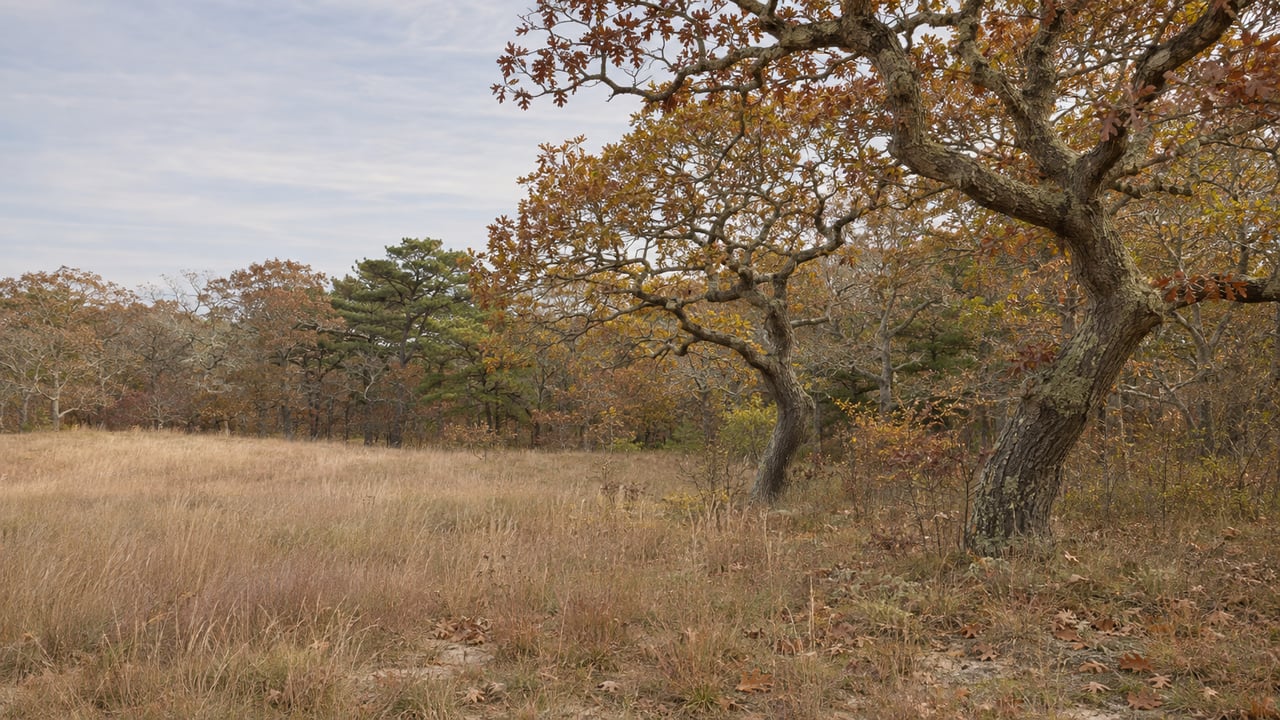
DEC describes the Peconic Road parcel as 4.21 acres of rare maritime grasslands and an important cultural landscape, and says the public will have access to a rose garden. The town has long treated this kind of ground as worth saving. Its Community Preservation Project Plan includes a 59.86-acre "Shinnecock Hills Grasslands/Heathlands" project and a 393-acre Shinnecock Hills Greenway.
Why the State Was Ready to Fund This Kind of Buyer
Troge credits recent changes at DEC with making state money available to Indigenous-led groups. As 27east reported, Indian nations won a court case against DEC for failing to follow tribal consultation rules. After that, the department hired its first Indian affairs director, Peter Ruben, in 2023, and Amanda Lefton was appointed commissioner in 2025. Troge said Ruben "has been leading this charge to make the DEC more equitable and supportive of not just tribal nations but tribally led organizations as well."
The relationship goes beyond one grant. Niamuck also received $100,000 from DEC to remove invasive species on Sugar Loaf Hill and $50,000 for its work on dismantling the Doctrine of Discovery.
The trust has a specific identity. It was founded in November 2021 by members of the Shinnecock Nation Graves Protection Warrior Society, and its board is made up solely of enrolled members of the Nation. Its stated mission is to "protect, preserve and purchase burial sites, and other culturally significant sites sacred to the Shinnecock Nation." Troge stressed that it is an independent 501(c)(3), separate from the Shinnecock Nation's government. "This is not an initiative of the nation," she said. "It's a completely separate group. But we support what they're doing."
Sugar Loaf Hill Showed How These Deals Could Work
Shinnecock Hills has seen a version of this before. Sugar Loaf Hill sits a short drive south on Atterbury Road, roughly halfway between the Stony Brook Southampton campus and Edgewater Restaurant. It is a high point looking over Shinnecock Bay toward the Ponquogue Bridge and the Atlantic, and in 27east's account of its history Troge described it as a burial place where funerary customs have been practiced "since time immemorial."
That deal needed three parties. According to the Peconic Land Trust, the trust bought the 4.6-acre summit on July 22, 2021, after years of work with the Graves Protection Warrior Society. In a simultaneous transaction, the town bought the development rights, and Roger Waters supplied most of the private funding. When the Town Council voted unanimously on June 8, 2021, John v.H. Halsey of the Peconic Land Trust said the purchase "acknowledges for all parties involved that the land we live on here in Southampton is the ancestral land of the Shinnecock people."
The Peconic Land Trust says the existing structures on the summit have been removed and restoration continues with the Warrior Society. The two groups are exploring ways for the public to learn about the site while respecting the people buried there. Once restoration is finished, the trust plans to ask the Town Board to transfer fee title to Niamuck. That would be the first time land in Shinnecock Hills is returned to members of the Shinnecock Nation. Niamuck and the Peconic Land Trust now co-steward the summit.
The town also changed its own rules that year. Southampton's Cultural Resources Protection Overlay District, added to the Town Code on November 23, 2021, covers the most sensitive areas, including the Shinnecock Fort and the Sugar Loaf Hill burial site.
The Spellman purchase is the next step after Sugar Loaf. At Sugar Loaf, a regional land trust held title, the town held development rights, and a private donor paid most of the cost. At Peconic Road, the Indigenous-led trust owns the land outright, bought with public money from Albany.
How Much of the Hills This Covers
Troge did not want the purchase seen as finished business. "People will think, oh, now you have this land, you have enough," she told 27east. "The Shinnecock Hills are 4,200 acres of land. This property is 4.2 acres." She also argued that the benefits extend past the Nation: "This is something that benefits all of us, and it's all of our responsibility to care for."
Four items are still open.
- The Peconic Road parcel itself. DEC's award says the public will have access to a rose garden on the 4.21 acres, and the four-lot sign is now out of date.
- Sugar Loaf Hill. The fee-title transfer to Niamuck has to go before the Town Board once restoration is complete.
- DEC's next rounds. About three-quarters of the program's $100 million is still unawarded, and DEC has said more rounds are coming.
- The CPF. Troge has asked for a formal way for community groups to propose parcels to the town's preservation fund.
For more on the trust, see niamucklandtrust.com.
Land in the Shinnecock Hills can sell for $1 million to $2 million an acre, according to Troge, and whether a parcel gets developed or preserved often depends on whether buyer and seller can agree on price. Our appraisal practice regularly values land for estates, attorneys and municipal boards across the East End. If you own land in the hills and want to understand what it is worth, and what your options are, Jennifer McLauchlen and our family firm offer a confidential valuation and consultation.